
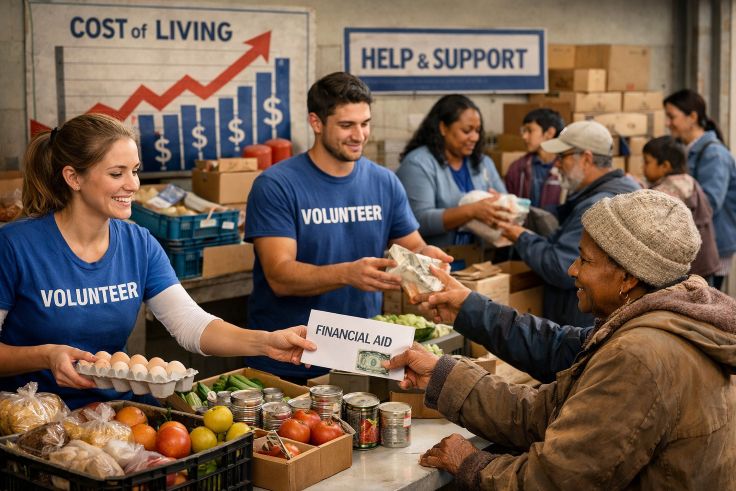
Global oil prices often climb rapidly when geopolitical conflicts disrupt energy supplies, creating ripple effects that reach far beyond fuel stations. Higher transportation and production costs can quickly push up the prices of food, utilities, and essential goods. As inflation accelerates, many households find it harder to cover basic expenses, increasing pressure on public assistance programs and charitable organizations.
Families with limited financial reserves are often the first to feel these rising costs. Research shows that The World Bank has consistently identified energy price shocks as a major driver of inflation and poverty, particularly in lower-income communities. As living expenses increase, demand for food banks, emergency housing assistance, and financial aid grows, placing additional strain on charities and nonprofit organizations that already operate with limited resources.
Why Higher Energy Costs Affect More Than Fuel Bills
Oil is a key input for transportation, manufacturing, agriculture, and logistics. When crude oil becomes more expensive, businesses frequently pass some of those higher operating costs to consumers. Reports from the International Energy Agency (IEA) explain that sustained increases in oil prices influence the cost of moving goods, producing food, and generating economic activity across multiple sectors.
For households, these changes can create difficult financial choices. Families may reduce spending on healthcare, education, or nutritious food simply to keep up with higher utility bills and transportation expenses. Those already living on tight budgets often require additional support from community organizations to bridge temporary financial gaps.
Growing Demand for Social Services
Periods of elevated inflation frequently coincide with greater demand for social assistance. Findings from the Organisation for Economic Co-operation and Development (OECD) indicate that rising living costs disproportionately affect lower-income households because a larger share of their income goes toward essential goods and services.
Food banks, homeless shelters, community kitchens, and emergency relief agencies often experience increased requests for assistance during these periods. Local governments may expand support programs, yet nonprofit organizations frequently provide flexible services that respond quickly to changing community needs.
The Financing Challenge for Charities and NGOs
Charities face a difficult balancing act during inflationary spikes. Operating costs rise alongside growing demand for services. Transportation, warehouse expenses, utilities, and staff costs all become more expensive, while donations may slow as individual donors face tighter household budgets.
Experts note that The United Nations Office for the Coordination of Humanitarian Affairs (OCHA) has repeatedly emphasized the funding challenges humanitarian organizations encounter when global crises increase both operational costs and humanitarian needs. Relief agencies often rely on a combination of government grants, corporate partnerships, philanthropic foundations, and public donations to maintain essential services.
Building Greater Community Resilience
Economic uncertainty linked to global conflicts demonstrates how closely energy markets and community wellbeing are connected. While oil prices eventually stabilize, periods of volatility can expose financial vulnerabilities across entire populations.
Studies published by the International Monetary Fund (IMF) suggest that targeted social protection programs can help reduce the impact of inflation on vulnerable households. Strengthening cooperation between governments, charities, businesses, and local communities can improve the ability to respond when future energy shocks occur. Long-term investment in resilient social support systems helps ensure that temporary spikes in energy costs do not become lasting social crises.


